Kingdom of Zanra
- Capital: Mikris
- Government: the monarch Shi Kezon-Aebutius and the Privy Council
- Population: about 600,000
- Language: Central Imperial
- Motto: “We are building a great future!”
- Army: about 15,000
- Money: bills of exchange (promissory notes) and bonds of the Bank of Zanra in denominations of 10, 50, 100, and 1,000; coins — Zanra crowns: denominations of 1 and 5 in copper, 10 and 50 in silver, 100 and 500 in gold, 1,000 in platinum
- Stylistic features: faces are covered with masks whose patterns indicate the wearer’s position and trade; elaborate makeup is sometimes applied instead of a mask. Men and women dress alike. Houses are built for a single family and surrounded by a high fence.
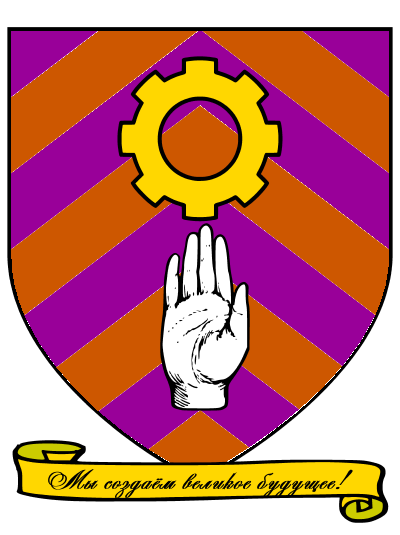
Zanra is a young and strong kingdom in the east of the Eastern Lands. Less than two hundred years ago it broke away from the Illior Empire and has achieved a great deal since. Gunpowder and many complex devices that spread all over the world were invented here. Zanrian engineers never stop working on inventions for a single day, skillfully combining mechanics and magic. The country’s motto is “We are building a great future!”, but it is not yet clear whether the Zanrians are building it for themselves or whether their ambitions reach far beyond a single state.
Structure
- Two estates. Formally, Zanrian society is divided into commoners and nobles. The nobles are descendants of ancient houses, both local and those who moved here from other parts of the Empire. However, in rights and duties the nobles differ little from commoners.
- State land. All the land in the kingdom belongs to the royal family, and nobles and commoners take it on long-term lease. Nobles have some privileges by right of birth: for example, a noble can’t be refused an extension of a lease if they can pay the required sum.
- The Privy Council. Formally, the country is ruled by a monarch who holds the throne by right of blood. The monarch is assisted by the Privy Council, about whose size and membership nothing is known. It is said that in practice power belongs to the council, and the monarch is merely a front.
- Departments. A dozen departments answer to the monarch and the council: War, Religion, Culture, Science, Taxes, Construction, Food, Diplomacy, Law and Order, Finance, Trade, and Seas and Oceans. Either a commoner or an aristocrat can head a department. Up to a tenth of the population is employed in this huge bureaucratic machine: officials see to the enforcement of the laws and govern the country. The monarch’s decrees go to the heads of the departments, who on their basis write new laws, supplement old ones, or issue regulations — for example, on buying weapons or on producing more food.
- Bureaucracy. Almost every aspect of the subjects’ lives is regulated by the rules and regulations of the departments. Any undertaking, whether building a house or opening a shop, requires permits and papers submitted to different departments. For the locals, filling out forms and standing in lines is routine. In some cities, such as Garn and Mikris, simplified rules apply to foreigners. Aristocrats also enjoy certain privileges: their petitions to the departments are considered first.
- Economy. Zanra is famous for its technologies. It has an almost complete monopoly on the production of firearms, gunpowder, and paper, and the country’s economy largely rests on the sale of these three goods. Another important business is printing: the Zanrians print books, newspapers, and bank bills for guilds and governments of other countries. In addition, Zanra is an important point on the trade route between the Sunny Islands and the Illior Empire: a huge flow of goods passes through the port of Garn in both directions.
Society
- Universal literacy. Life in Zanra requires filling out a great many papers, so everyone here teaches their children to read and write. Almost the entire population can read and write. Very many work in the departments.
- No distinction of sex. The Zanrians don’t like to emphasize a person’s sex: in speech they prefer neutral pronouns — “we”, “you”, “they”. Outwardly, the men and women of Zanra look alike: their clothes are of the same cut, and their faces are hidden behind masks.
- Religion. The religion of Zanra grew out of the imperial Ancestors’ Cult and still has much in common with it. But after independence was gained, the scattered cults were united into a single church with a canon and a pantheon of deities.
- A country of inventors. The Zanrians encourage the urge to experiment and create new devices. All-encompassing bureaucracy coexists here with an indomitable spirit of inquiry. No wonder gunpowder was invented here, and many complex devices that make life easier are used in everyday life.
- Small towns. Zanra has only six relatively large cities, and the rest are small settlements with no more than five thousand inhabitants. This is how people have lived here since ancient times. In a small town everyone knows everyone else, and this leaves its mark on people’s behavior.
- Reserve. The Zanrians are not very sociable. There are no large arenas or theaters here, and no noisy taverns — except in the trading cities. The locals prefer a secluded life and the company of close acquaintances. It isn’t customary to talk about one’s problems, or about private life in general, even with close friends. Houses, as a rule, are built for a single family and surrounded by a high fence.
- Masks. By tradition, the Zanrians cover their faces with masks. The patterns on a mask indicate the wearer’s position and even trade. Wearing a mask with someone else’s patterns is shameful and forbidden by law. Some apply elaborate makeup to their faces instead of a mask.
- The post. The departments carry on a huge correspondence, so the post and roads are excellently developed in Zanra. Hence the local habit of constantly corresponding with relatives and even with strangers.
Relations with other countries (click to expand)
How the average inhabitant of Zanra regards other countries.
- Bastion Union: This young state has a decent chance of surviving. For now, helping it means exposing ourselves, so we’ll wait until things become clear. But their striving for freedom finds an echo in our hearts.
- Slavetraders’ Coast: They say almost no one there can read and write. It’s a hot barbarian land where we hardly ever go.
- Vishnevodskoye Principality: The inhabitants of the principality are skilled mages and necromancers; they can be dangerous and treacherous. We have never liked their war with Enforis, but we try to remain neutral in this conflict.
- Principality of Zalessk: They find many interesting objects and materials from the era of the First Humans. They say they have an inventive streak, like us, but lack knowledge. Some of us move to the Principality of Zalessk — to search for ancient artifacts or to enlighten the locals.
- Illior Empire: For many years we were part of the Empire, but we decided to go our own way. Our relatives and trading partners live in the Empire, and they have long since become our allies and friends. But the Empire is vast, and there are those there who dream of depriving us of our freedom. That is worth remembering.
- Principality of Igni: A distant hot country. We know little about its inhabitants, but we’ve heard that they are a warlike people who also build excellently. Echoes of their wars with Rojo have long reached even us.
- Principality of Enforis: Our ancestors traded with Enforis even before the Empire. We sympathize with the principality in its endless feud with Vishnevodsk and help when we can, but we try to remain neutral.
- Colonial Rojo: Many traders come to our ports from there. The colonies have adopted much from the metropolis, and we don’t much like dealing with them.
- Colonies of Makharatkha: Unfortunately, this part of the islands is too restless to do stable business with. Besides, there’s too much slave trading there, and in that region Elka’s Oligarchy matters far more to us.
- Kingdom of Gross: They were also part of the Empire. Our ties have never been especially strong, but we value our friendship with Gross and fully support their desire to build an independent society.
- Kingdom of Rojo: A former prefecture of the Empire and a country that has been visited by bloody feuds for centuries. It seems the people there simply don’t know how to live peacefully, as we do. We are wary of their hot temper and impulses. We are sorry that they have lost their independence, but let’s believe that a time of peace has come for them.
- Land of Oases: These people are at a very low stage of development, although sometimes even a civilized person has something to learn from their wisdom.
- Makharatkha: The Makharatkhans are our longtime trading partners and allies. We often use the services of their fleet, and they arm their ships at our shipyards.
- Elka’s Oligarchy: Important trading partners on the islands, among the main buyers of our mechanisms and weapons. They are civilized and stable, like their metropolis — Enforis. It’s always a pleasure to do business with them.
- Archdemon’s Plateau: A wild, untamed land. We know little about it.
- Republic of Drinrog: Their history is somewhat similar to ours: they also decided not to be part of the Empire any longer. However, the traders of Drinrog are too pushy and are forever poking their noses where they aren’t wanted. As a rule, they know the laws well, so lawsuits with them — whether on our land or theirs — often turn into real legal wars.
- Dragons’ Country and Ethel: We respect the dragons and elves and honor their deeds in the days of the Great War. They have withdrawn from the world, and we like that decision: we humans want to walk into the future on our own, without outside interference. We trade with them and learn from them when the chance comes up, but it seems we are too different.
Cities
Mikris
The capital of the kingdom. Apart from the residential quarters and the transit zone for traders, the city is built up with department buildings, and it is inhabited by officials and other civil servants. In 817 Mikris became a trap for the imperial army and burned down, after which it was rebuilt.
Valmir
The unofficial capital of the kingdom — a well-fortified city, far more densely populated than Mikris. They say it is here and in the surrounding area that gunpowder is made. Valmir is one of the oldest cities in the country: buildings of the First Humans have survived in it.
Garn
A large port city, once the Illior Empire’s outlet to the Dark Ocean. Besides trading floors and warehouses, there are dry docks here where ships are refitted with the latest technology.
History
In Brief
People lived in the lands of the present-day kingdom long before the end of the Great War. In 88, the locals voluntarily joined the Illior Union, and in 206 the Illior Empire, where these lands became one of the provinces.
For several centuries nothing remarkable happened here, although Zanra gradually grew more and more different from other parts of the Empire. In the 450s, after the great reforms in the Empire, the Zanrians quietly began to build a state within the state: under the guise of guilds they created a system of power that duplicated the imperial one. The work went slowly, and only in 817, against the backdrop of the coup in the imperial capital, did a rebellion break out that brought the province independence. By then, the Zanrians had secretly invented gunpowder, which helped them defend it.
Zanra has existed as an independent state for less than two centuries, but the government has tried to deepen the small cultural gap with the Empire as much as possible. Several generations have already grown up who can’t imagine themselves as part of another country.
During the Great War
- −143. First mention. Garn and Valmir are mentioned in the trade documents of ancient Illior. Garn at that time trades mainly in seafood and serves as an important point on the trade route from Illior to Olifanor, through which Illior receives precious stones from the Silver Mountains. Valmir is mentioned as a small ancient city where alchemical reagents, such as mercury and saltpeter, are sold. Already in the imperial era, there are mentions of buildings of the First Humans in Valmir: evidently, some outpost of theirs stood here a very long time ago. Most likely, the First Humans abandoned it at the beginning of the Great War, which is why the fighting barely touched these places, and later people settled them again. Exact dates can’t be established.
In the Imperial Era
- 1. Envoys of Valmir and Garn come to the victory celebration. Records survive about the ancestors of today’s Zanrians, who already then had some of their present traits: for example, they wore masks and, as far as is known, sought knowledge about the technologies of the First Humans.
- 88. Maldred’s Eastern Campaign. Maldred, the ruler of the city of Illior, gathers an army and sets out on a campaign along the route from Illior to Garn. For many years, this important trade route had been attacked by bandits and monsters from the Old Forest. Maldred’s army cuts wide clearings and destroys countless enemies. Along the way it is joined by detachments from Valmir, for whom this route is also very important. As a result of the campaign, the lands of present-day Zanra become part of the Illior Union, and since then the region has developed rapidly.
- 181–184. The Monstrous War. When monsters suddenly begin to attack human lands, Zanra suffers very badly. One of the centers of the attacks becomes the Old Forest, which then stretched all the way to the Dead Mountains. Many settlements are cut off from the world for a long time, and trade almost stops. The help of the Illior Union comes in very handy.
- 206. Part of the Empire. The ruler of Illior, Maldred the Conqueror, proclaims the creation of the Empire and declares himself the first emperor. All the lands of the Illior Union become part of the new state. The inhabitants of Zanra greet the changes with enthusiasm, but from the very beginning the bureaucracy and administration of the Zanra Prefecture differ somewhat from the imperial ones. Laws of its own are in force here — right up to the reforms of Emperor Riklaeron in the middle of the 5th century.
- The 300s. The Unspoken Alliance. While the Rutilius family of the Arnost Prefecture pursues an aggressive policy against the Principality of Enforis, the Zanra Prefecture, long tied to Enforis by trade, helps the principality. Officially there is no war, so the help is unofficial too: the Vishnevodians’ mercenaries and monsters vanish without a trace in the Zanrian borderlands, and Enforis often receives humanitarian cargo from Zanrian trading houses and wealthy families.
- 394. The Coup. In the capital, an attempt is made to resurrect the deceased Emperor Gustav; he rises as an undead and stages a massacre in the palace. While the whole nobility and society are absorbed in these events, a small coup takes place in Zanra: conspirators burn the prefect and all his associates alive in one of his residences. The prefect had tried to interfere with the locals’ way of life and break the established system of laws and administration. Later, when a new emperor ascends the throne, an investigation is held, and all the rebels are executed. However, there are persistent rumors that stand-ins were executed. Since then, the imperial chancellery has tried to appoint more pliable prefects to Zanra.
- The 450s. The Reforms. Under Emperor Riklaeron, the law of the Empire is put in order and the laws of different provinces are harmonized. The new laws reduce the role of the state and soften taxes. The local elite uses them to preserve its distinct identity: many organs of power register as guilds with internal charters that embody the local laws. In the future, these “guilds” will become the departments of an independent state.
The Time of Troubles
- 553. The Economic Crisis. Because of the tax increase, the crisis grips the whole Empire, and Zanra is no exception. Many small guilds disappear or are absorbed by large ones, and the power of the large guilds grows sharply. Membership in such guilds, which essentially form a state within the state, promises privileges, concessions, and subsidies the population can’t do without.
- 560–573. The Coups in Rojo and Gross. The prefecture shows not the slightest desire to secede. On the contrary, it remains one of the main bulwarks of imperial power.
- 692–706. The Little Golden Age. The Opii and the Furii rule the Empire. Trade flourishes, life gets better, and Zanra grows rich along with the whole country.
- 698–711. The Sun Fever. After the discovery of the Sunny Islands, hundreds of adventurers rush across the ocean in search of treasure and other ways to get rich. The port of Garn, which had lost its importance, comes back to life. Since then Garn has been growing, and the flow of goods through it increases as the islands are colonized.
- 715–717. The Makharatkha Plague. The epidemic raging across almost the whole world affects Zanra less than others. It is believed that the Zanrians are saved by their habit of living in small settlements and their custom of wearing masks. Some quarantine measures introduced during the plague remain in force for several decades. It is believed that it is then that secret preparations for secession begin in the prefecture: some settlements and cities are cut off from the central government and its inspectors for a long time, the Empire itself is greatly weakened, and the authority of the emperors throughout the country continues to fall.
- 817. The Coup in Zanra. A revolution takes place in Illior that greatly weakens the emperor’s power and strengthens the power of the aristocratic houses. Against this backdrop, the Zanra Prefecture declares its independence. The imperial chancellery had noticed no signs of a coup being prepared — for centuries Zanra had been a bulwark of stability — so there were no imperial legions here at that moment. There was only the XXI Legion, raised by the local nobility and subordinate to it, and the watch, subordinate to local self-government. The rebels killed the prefect appointed by the Empire right in his office, and that same evening the inhabitants were told of the creation of the Kingdom of Zanra. A representative of a local aristocratic family, Ana Kezona-Aebutia, became the monarch. The population greeted the coup completely calmly, and there were almost no malcontents: the basis of the new state was the large guilds, which had been duplicating the functions of the government for more than a century and whose work involved up to 80% of the inhabitants. The Senate of the Empire, which had just taken power into its own hands and was forced to repeal repressive laws, was not ready for war with the rebellious province. Zanra’s envoys agreed with the Empire on a large monetary compensation in exchange for recognition of the new state. However, the Senate was slow to make a final decision.
- 817. The Burning of Mikris. Young Illiorian aristocrats, inspired by the successful coup in the capital, decided that they could reconquer Zanra with mercenaries and volunteers. The youngsters thirsted for blood and dreamed of taking the rebels’ places. By the beginning of summer they had gathered about 20,000 people — mostly free people ready to fight for the right to plunder the captured cities. The government of the Empire turned a blind eye to this: in case of success the Senate would not have failed to bring in the imperial legions, and in case of failure it washed its hands of all responsibility. To the applause of the townsfolk, the army broke camp near Illior and by forced march reached the capital of Zanra, Mikris. It met no resistance and found the city empty. The young generals decided that the Zanrians had been frightened and fled, surrendering the city to them. But it was a trap: the city had been mined with the newest invention of Zanrian craftsmen — gunpowder. When most of the army was inside, the explosions and a monstrous fire began, and elite detachments of Zanrian battle mages, supported by golems, struck pinpoint blows at the disordered army. Of twenty thousand people, only three thousand survived that slaughter. Soon the government of Zanra sent the agreed compensation to Illior together with a letter apologizing that citizens of the Empire had been harmed during the planned demolition of the city for its reconstruction. Since then no one has tried to seize Zanra again.
- 818. The Reforms of Queen Ana. In the first year after the coup, the new kingdom hardly changes its laws and continues to use some imperial institutions. The state symbols change, and the population is gradually prepared for the changes. In January 818, Queen Ana finally announces sweeping reforms.
- Departments. Twelve large guilds that had already been running the country officially become state departments.
- Confiscation of land. The ruling Kezon-Aebutius family takes all the lands of the kingdom for itself. The noble houses are extremely displeased, and cruel repressions follow: people disappear without a trace, some families flee the country. For hereditary aristocrats, a reduced rent is introduced for the lands that previously belonged to them, while for commoners the rent is now set by the state, and it becomes much lower than under the Empire.
- Tax reform. The tax laws change completely: a progressive tax and accounting of income by paper invoices are introduced. The more a person or a guild earns, the more they pay the state. Because of this, large trading houses and foreign guilds leave Zanra, and state institutions take their places. On the other hand, taxes on small businesses drop sharply, and many small entrepreneurs appear in the country.
- Slavery. Using slaves in production and agriculture is forbidden, although owning slaves is still legal. Following this, the production of golems and other mechanisms develops in the kingdom.
- Monetary reform. Zanra is the first in the world to put state paper money into wide circulation. True, at first it is tied to the imperial gold standard, and it gains currency beyond the country’s borders only seventy years later.
- State religion. A single church is created out of the scattered cults — the Pantheon of Zanra — with high priests, common holidays, and rites.
- Judicial reform. The laws change completely. Now most crimes are punished with fines or community service. Almost all prisons are abolished. Especially dangerous criminals are executed, kept in the few remaining dungeons, branded with magical brands, or shackled with collars like those of slaves.
- Standards. The charters of the guilds that became departments turn into laws. This is how strict standards for the quality of construction, the freshness of food, and much more appear in the country.
The New Age
- 833. The Zanra Pyrotechnicians guild is created. In reality, it is a division of the Department of Trade that sells the most advanced developments — gunpowder and gunpowder weapons. For a moderate fee the guild trains anyone who wishes, and to this day it has an almost complete monopoly on gunpowder production. In addition, it recruits very young people in different countries: the most capable are transferred to Zanra, where they essentially work for the kingdom’s defense.
- 837. The Death of Queen Ana. After twenty years of rule, at the age of 70, Queen Ana dies. By law the throne passes to her eldest daughter, Erri. Courtiers led by one of the noble houses try to stage a coup and make an attempt on the heirs who have arrived for the funeral. But the Privy Council knew of the plot, and all the conspirators are seized as soon as they begin to act. A week later, as planned, Erri is crowned. The rebels are tried in open court, and all the details of the conspiracy become known to the public. The trial drags on for almost two years and becomes one of the main topics of conversation in Zanrian homes; novels and plays come out that either exalt the conspirators or denigrate them. In the end only one person is executed; the rest get off with large fines and community service. Since then, public discussion of the decisions of monarchs and of court intrigues has become an important part of public life. Opposition writers and singers even appear in the country.
- 860. The childless Empress Eloren of Illior takes as her husband a scion of the royal family of Zanra, Otal Kezon-Aebutius. Only more than thirty years later, in 891, is a son finally born to them, the future Emperor Aulus. The Kezon-Aebutii officially renounce their claims to the Illiorian throne, but they are said to receive advantages in the Illiorian markets in return. In addition, a branch of the Zanra Pyrotechnicians opens in Illior, which the Senate and the imperial family had previously opposed. The kinship strengthens relations between the two states, but in the circles of the Illiorian aristocracy people begin to say that someday the emperor of Illior himself could take the throne of Zanra, reuniting the two countries, or a relative of his could, placing Zanra under Illior’s control.
- 875. The Fire in Garn. In a dry summer, a terrible fire breaks out in Garn. It is believed that the fire started in the warehouses, spread to the shipyards, and then engulfed the whole city. It is still unknown whether it was arson or an accident. The catastrophe claims thousands of lives, the kingdom suffers huge losses, and the economic crisis lasts several more years. By 881 Garn is completely rebuilt, and a fire-fighting division is created in the Department of Law and Order (previously fires were put out mainly by volunteers or ordinary watchmen).
- 882. Ninety-year-old Queen Erri abdicates in favor of her eldest son, Trem; she herself will die in 887, at 95. Trem is 51 at the time of his coronation, and he has had time to make a career in the church, becoming high priest of Xandal. Over the years of his reign he does a great deal for the whole pantheon: temples and shrines are built throughout the country, and a monastery is founded. In Illior, Trem builds a temple of all the gods. Thanks to him, the church greatly strengthens its position at court, and priests are readily received in high offices.
- 911. Eighty-year-old King Trem abdicates in favor of his daughter, Erkhi, and retires to a monastery. Later he is canonized as a holy messenger of the gods.
- 913. A Strange Incident. Queen Erkhi gives a festive speech in the capital before thousands of townsfolk and foreigners. Suddenly she declares that the Privy Council has too much power and that she is dissolving it by her own will. Literally a minute later her speech becomes confused, the queen begins to rave and loses consciousness. Some eyewitnesses claimed it was magical interference.
- The next day the Department of Science announces that the queen has been struck by an illness.
- A week later the queen speaks in public again, this time before a wide circle of courtiers, and admits that she has long been ill but concealed her ailment.
- This incident gives rise to a mass of rumors in Zanra and far beyond. The emperor of Illior, Aulus, Otal’s son and a close relative of the Kezon-Aebutii, even publicly offers the queen help and invites her to Illior.
- 998. After 87 years of rule, Queen Erkhi dies. Shi Kezon-Aebutius ascends the throne.