Kingdom of Rojo (Protectorate)
- Capital: Danir
- Government: King Jock I and the protector, Emperor Yorick; in the kingdom the protector is represented by Olma Varta Numicia
- Population: about 500,000
- Languages: Southern Imperial, Central Imperial
- Army: unknown
- Money: the Rojo peso; denominations of 1 and 5 in copper, 10 and 50 in silver, 100 and 500 in gold, 1,000 in platinum, 10,000 in rubies
- Stylistic features: swarthy skin, dark hair. Red in clothing and in the furnishing of houses. Light fabrics such as silk, loose clothing that doesn’t restrict movement. Gold jewelry in enormous quantities: the more, the more honorable. All inhabitants carry a weapon from their teens — symbolic or real. The customary execution is burning at the stake. References: Spain, Portugal.
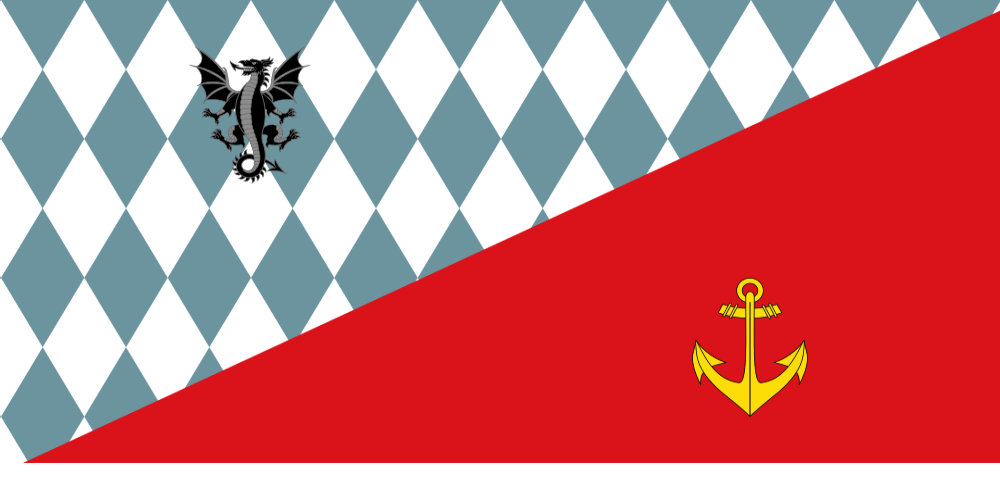
Rojo is a warlike maritime kingdom in the southwest of the Eastern Lands. It was once a province of the Illior Empire; in the 560s it was the first of the provinces to rebel and win independence, and then for centuries it fought its neighbors — Gross and the Principality of Igni. In 1005 everything collapsed: Rojo lost the Second War with Igni and lost the West Bank, the ruling dynasty died out, and a former bandit ascended the throne. Now the kingdom is a protectorate of the very empire from which it once broke away, and society is split as never before.
Structure
- Estates. Historically, the kingdom had three estates: nobles, commoners, and serfs. After the recent war, the clergy also received special rights.
- Rights. Full power belongs to the nobility and the clergy. Commoners have no political rights, but they are free. Serfs are effectively in the position of slaves: they can’t leave their place of residence without their master’s permission, and they can be bought and sold. Once a year a serf can buy their freedom by paying the master a set sum, and become a commoner. Murdering or abusing a serf is considered a crime and is punished with a large fine.
- Protectorate. Under the treaty of protection, the kingdom’s protector — the emperor of the Illior Empire — has the right to veto any decree of the monarch.
- Council of Ministers. The monarch has a council of ministers — an advisory and executive body. Some of the ministers are appointed and dismissed by the monarch, some by the protector.
- Lands. All the lands of the kingdom are divided between the noble houses and the Church of the Stars. Until recently, the largest landowner was the royal family, but after the fall of the Calatrava dynasty the Church took its place. The local aristocracy has thinned out considerably, and the emptied lands are bought up or taken on long leases by foreigners. By law, the king has the right to take land away from a noble or a leaseholder who manages it badly.
- Finances. Before the war, each feudal lord collected taxes on their own lands and settled accounts with the crown personally or through intermediaries; there were no clear rates. Jock I immediately set about rebuilding the tax system on the model of the Illior Empire, but so far the reform is stalling.
Society
- Separatism. Very many in the country are unhappy with the outcome of the Second War with Igni and with the Empire’s protectorate. In the taverns you can often hear that death is better than a return to the Empire. These sentiments are fueled by the rebel fortresses that proclaimed their own state. On top of that, many rumors circulate that Queen Morena, who died in 1005, is actually alive, which means the old dynasty could be restored to the throne.
- Schism. The recent split in the Church of the Stars confuses ordinary believers. The church now has two patriarchs, and it isn’t easy to make sense of the subtleties of their theological and political disagreements. The flock is caught between two fires.
- Holidays. The kingdom has many traditional and religious holidays, and they are celebrated on a grand scale. For the duration of a holiday, serfs are given their freedom.
- The sea. A significant part of the kingdom faces the Inner Sea in the west and the Strait of Serenity in the south, and maritime traditions are strong here.
- Townsfolk. Commoners have no political rights, and the land belongs to the nobles, so people flock to the cities. Because of this, the cities of Rojo are overcrowded and unsafe.
- Military traditions. Rojo is a warlike country: in decent families, all children are sent to study with fencing masters. For a commoner, a soldier’s career is considered prestigious and profitable, but far from everyone is taken into the army.
- Religion. The official religion of Rojo is the Church of the Stars. According to its teaching, the first humans came into the world from the stars and possessed divine grace, but the demons, dragons, and elves corrupted humans and deprived them of grace. The duty of every person is to strive to cleanse themselves of their sinful nature. After death, human souls return to the stars, where Judgment awaits them. Previously the king was considered the head of the church, and the Patriarch merely a steward under him, but after the Calatrava dynasty died out the Patriarch became the head of the church, and the king the first among equals. Other religions are considered heretical, and foreigners are forbidden to preach in the kingdom.
- Chivalry. All the nobles of Rojo are considered knights and are obliged to come to war at the king’s call. Tournaments are held in the kingdom constantly, and victories and defeats in them affect a noble’s political career. Those who can’t fight because of health or age compete in oratory and other disciplines that don’t require physical strength. The recent war claimed the lives of very many aristocrats, and the tournaments have changed their character: now they are more like fights in an arena.
- Duels. Questions of honor in the kingdom are customarily settled by duels, and they are permitted by law. Rich nobles often hire champions to fight in their place.
Relations with other countries (click to expand)
How the average inhabitant of Rojo regards other countries.
Nota bene: the kingdom is still in deep crisis, and society is split. The views described here are those of the pre-crisis times.
- Slavetraders’ Coast: Bandits, pirates, and other riffraff. We prefer to have nothing to do with them.
- Vishnevodskoye Principality: Terrible people, cursed by both the church and humankind. Not only are they sorcerers, they also practice the vilest magic — necromancy. Every person deserves rest after death.
- Principality of Zalessk: Uneducated barbarians. We wouldn’t care about them if they didn’t raid our coast in their boats.
- Illior Empire: Much blood has been spilled between us and the Empire. We won our independence in war, and our paths parted. Now the Empire is our trading partner, but not our friend.
- Principality of Igni: Our ancestors have fought Igni for many generations! They are our sworn enemies, and there is hardly a single good person among them. They are demons in human guise, just waiting for a chance to spill your guts.
- Principality of Enforis: Venerable kin of the elves and first-class seafarers. We compete with them at sea, but we are bound more by friendship and respect: in Enforis they know well what honor and nobility are.
- Colonial Rojo: These are our islands. They are too scattered and the population is small, but most of the land there belongs to our aristocrats, and therefore to our crown. We feel at home there, although the culture there differs a little from ours.
- Colonies of Makharatkha: An unpleasant little place that our seafarers have to sail past on the way to our colonies. Their attempts at statehood are nothing more than a brawl among notorious bandits for the title of king of the hill. Sooner or later these islands will become our colonies too.
- Kingdom of Gross: Our sworn friends. We’ve been at each other’s throats for too long to simply forget the past. But unlike Igni, the Grossians are noble and honest, and we respect them for their valor on the battlefield. Besides, despite the eternal conflicts, many of us have relatives and business there.
- Kingdom of Zanra: The Zanrians are strange and not at all close to us in spirit. But they are a conscientious and honest people who make first-class weapons. Their cannons and gunpowder make our ships even more dangerous!
- Land of Oases: Our ancestors tried to colonize these lands, but failed. Wild tribes live there, to whom our preachers go. Perhaps through faith these barbarians will become a civilized people.
- Makharatkha: Vile pirates with whom we are forever at war on the seas and oceans. Hucksters with nothing sacred.
- Elka’s Oligarchy: Our rivals in the Sunny Islands. However, you can do business with them, and most importantly — they are sworn enemies of pirates and bandits of every stripe.
- Archdemon’s Plateau: A terrible, cursed place, a real hell. It should have been wiped off the face of the earth back in the days of the Great War. The elves and dragons made a big mistake by letting the former slaves of the demons live as they please. They say these heretics worship demons.
- Republic of Drinrog: A proud trading state. Like us, they build sturdy ships, though of course no match for ours. Drinrog can’t be a reliable ally: everything there is measured in profit, and they have no single leader to come to terms with. But you can trade with them.
- Dragons’ Country: Many people from the Dragons’ Country live among us. Dragons are a great people, but they treat their descendants and servants like dirt, and many try to escape from them. We don’t like it, but we won’t meddle in the affairs of this people.
- Ethel: Almost all the elves have left our world, and that suits us just fine. When we meet them, we try to learn as much as we can about ancient times and our ancestors — the First Humans. The affairs and history of the elves themselves don’t interest us.
Regions / Cities
Most of the lands of Rojo are divided like a patchwork quilt among aristocratic families, and there are no clear administrative boundaries here. At present, two large regions can be distinguished in the kingdom: Danir, adjoining the capital, and the Golden Coast. Until 1005, Rojo also held the Western Green Lands and the West Bank. Following the Second Igni–Rojo War, the West Bank went to the Principality of Igni, and part of the Western Green Lands is controlled by the Bastion Union.
Danir
The Danir Region is now the westernmost part of the kingdom. It is washed by the Inner Sea, the Monstrous Sea, and the Strait of Serenity, which the region itself forms by jutting out to the southwest in a sharp cape. On this cape stands the administrative center of the region — the capital of the kingdom, the city of Danir.
The region’s shores are rocky, and the soils are poorly suited for farming. Most of the population lives in the capital, and many small towns are scattered along the coast. The locals make their living by fishing, shipbuilding, and trade. The shipyards here are famous all over the world as the best. Further from the sea, where the soils are more fertile, fruit and olives are grown and goats are raised. There isn’t room in the capital for everyone, so runaway serfs and commoners settle in the surrounding towns and stick their shacks onto old buildings: the warm climate allows living almost in the open air.
Golden Coast
A region in the south of the country whose main landmark is Dragon Mountain. For centuries it has drawn pilgrims and adventurers from all over the world: many religious movements consider the mountain sacred, and the network of caves beneath it has still not been fully explored. The region’s capital is Trinivo, the main port for pilgrims; on the rocky shore nearby stands the fortress of Sunset Bay, one of the bases of the navy.
There are almost no large cities here, and many fishing villages and the estates of aristocrats from all over the world are scattered along the coast. During the war, the region suffered greatly: many estates were burned by rebellious peasants, and villages were ravaged by raiders from Igni. Many more years will pass before the Golden Coast again begins to attract the rich who want to bask in the sun by the warm sea.
History
In Brief
People settled in these lands even before the end of the Great War. In the first centuries of the new era, city-states competed here, the largest of which were wealthy Danir and warlike Delamota. In 167 they united into the Union of the Free against the growing Illior Union, but in 171–173 Maldred the Conqueror subjugated their lands, and later they became part of the Empire. It was here that the Church of the Stars was born, and for centuries it remained the bulwark of the local love of freedom.
In the 560s, during the Time of Troubles, Damian Tarquinius-Calatrava raised a rebellion and, with the help of the Church of the Stars, created the Kingdom of Rojo; in 573 the Empire recognized its independence. Since then Rojo has known almost no peace: first it fought Gross over disputed lands, and then for three centuries the Principality of Igni. The Calatrava and Narrakez dynasties took turns on the throne.
In 1005, Rojo lost the Second War with Igni. Queen Morena, the last of the Calatrava line, died, Jock I ascended the throne, and the kingdom became a protectorate of the Illior Empire.
During the Great War
There are no reliable records of settlements in this territory during the Great War. However, people clearly lived here at least since −50: a description of Sunset Bay, where the victory celebration was held, dates from the year 1, and by then a fortress was already standing there.
In the Imperial Era
- 1. The first year of the new era is declared to be the year when the last archdemon in the world, Asmodeus, was defeated. From July 20, a victory celebration went on for half a year in Sunset Bay on the Golden Coast, and hundreds of thousands of people from all over the world came to it. It is then that Sunset Bay is first mentioned in the chronicles — and right away as a well-fortified fortress with a well-appointed harbor.
- 18. The Bersanians found the Thorn — a fortress on the western border of their domain. The chronicles say it is needed not so much for protection against monsters as against the people living to the west and south. This probably refers to the inhabitants of Samrun, Ayondo, and other cities that later became part of the Kingdom of Rojo.
- 27. The first archival records of the city of Danir, the future capital of the kingdom — minutes of the meetings of the city council. They mention many aristocratic family names that can be traced to this day.
- 65. Maldred, the future founder of the Illior Empire, takes as his wife Constancia Narrakez from the southwestern lands (present-day Rojo).
- 101. The Danirians found the fortress of Najir on the site of a small village and take control of the Sun Strait, which gradually becomes an important trade route.
- 152. The chronicles increasingly mention the fortress city of Delamota. Watching the growing might of Illior and the Kingdom of Gross, founded a year earlier, the people here also begin to unite. The lands from Samrun to Sunset Bay come under the influence of Delamota. Military Delamota competes for power with the richer and more cultured Danir to the southeast. It doesn’t come to real battles: the nobility prefers to settle scores in duels.
- 165. The first mention of the Church of the Stars. Its followers worship the First Humans as gods and claim to possess secret knowledge that will save the souls of the descendants of interbreeding with demons. The teaching becomes more and more popular. That same year, the Abbey of the Unquenchable Flame is founded not far from Danir.
- 167. The Union of the Free is created — an alliance of city-states that set itself against the Illior Union. Its most powerful city becomes Danir, which buys up many wavering neighboring rulers. From this year on, border skirmishes keep breaking out with the Kingdom of Gross and Samrun, which are part of the Illior Union.
- The main role in the Union’s decisions is played by the aristocracy of Danir, while the rulers of Delamota and Sunset Bay are responsible for war — for the army and the fleet respectively.
- 171–173. Maldred’s Southwestern Campaign. Maldred receives word from the city of Corilla that his wife’s relatives from the Narrakez family have been driven from their lands and are being tortured. He sends the Union of the Free an angry letter, and in response receives the severed hand of one of his relatives. Then Maldred gathers a large army and marches southwest. The campaign drags on for two years. Maldred takes control of all the lands of the Union of the Free, but some of his offenders flee to the West Bank, to Najir.
- It is still unknown whether anyone really tortured Maldred’s relatives or whether it was all a planned provocation. The Narrakez, who had intermarried with the enemy, were definitely not in favor with the local nobility. But there are serious doubts that the Union of the Free, which was inferior to the Illior Union in both lands and army, would have provoked a big war. On the other hand, the locals have always been famous for their explosive temper and may simply have overestimated their strength.
- 174–185. The Reckless Decade. The conquered lands of the Union of the Free from Samrun to Sunset Bay are restless. The Illior Union constantly has to pacify the local population, which tries to throw off its puppet rulers. It is then that the lands are partitioned, and many of them go to the Kingdom of Gross (later, within these borders, they will become part of the prefecture of the same name). The locals are forcibly resettled or driven into slavery. Aristocrats flee to the West Bank, and many of those who remain harbor resentment and anger that will poison relations with their neighbors for more than one century. The troubled times push people toward faith, and the parishioners of the Church of the Stars multiply year after year. Churches often become a refuge for freethinkers, and aristocrats fleeing reprisals hand over their wealth and lands to them.
- The turmoil coincides with the Monstrous War: for three years monsters from the north continuously attack human settlements, which destabilizes the whole region.
- Meanwhile the West Bank is booming: many small towns are founded here, plantations laid out, and a lively trade carried on with the Principality of Igni.
- 197. One of the leaders of the Union of the Free becomes its formal head.
- 206. The founding of the Illior Empire. Maldred, 181 years old, whose life is already drawing to a close, proclaims himself the first emperor. The whole Illior Union, that is, almost all of the Eastern Lands, becomes part of the Empire. The decision meets no resistance. Representatives of all the lands of the Empire, as well as elves and dragons, come to the coronation.
- 260–271. The Reign of Julinika. Julinika Maldreda Augusta Tarquinia becomes the first empress in history. Continuing the work of her builder great-great-grandfather, she founds the Imperial Arena in Illior. Under her, the slave trade and gladiatorial fights flourish in the Empire.
- 267. The Revolt in the Rojo Prefecture. The remnants of the Union of the Free, together with ministers of the Church of the Stars, raise a revolt in the city of Corilla. They consider the empress dissolute and sinful and remind Illior of old grievances. Julinika orders the prefect and the III Legion to drown the revolt in blood. The order is carried out: about a thousand prisoners are crucified along the highway near Illior. The empress receives the nickname the Bloody.
- 268. Julinika bans public services of the Church of the Stars and the building of new churches.
- 271. Julinika abdicates in favor of her grandson, Gaius Maldred Augustus Tarquinius I. She herself will die in 277 at the age of 95.
- 277–279. Gaius I decides to expand the Empire and begins to prepare to seize the West Bank. A year later, fourteen legions and a fleet are ready for the campaign. The Union of the Free, which holds the West Bank, enlists the support of the nomads of No Man’s Desert and some rajas of Igni. The war goes on throughout 278. The forces of the Empire are much better trained and armed, and it also has numerical superiority. By December 279, the West Bank becomes part of the Empire under the name of the Rinar Prefecture.
- 280. The War of Igni and the Empire. Without letting his troops recover, Gaius I decides to seize No Man’s Desert and the Principality of Igni as well. The campaign fails resoundingly: the Empire suffers terrible losses and is forced to retreat. The fortress of Westheld is founded.
- 280–294. The nomads of No Man’s Desert and the rajas of Igni, who previously fought each other more than anyone else and paid no attention to the northern lands, now raid the Rinar Prefecture together. For almost fourteen years Gaius I spends enormous sums to hold on to the seized lands. In 294, through the mediation of the dragons, who provided neutral territory for the negotiations, Gaius I and Maharaja Shazmehr sign a peace treaty.
The Time of Troubles
- 560–567. The Revolution in Rojo. A grandson of the Illiorian emperor Riklaeron by his first marriage, Damian Tarquinius-Calatrava, whose family had been pushed away from power by court intrigues, decides to join forces with the Church of the Stars and play on the people’s longing for the Union of the Free and the ancient free times. The economic crisis and the impoverishment of the Empire play into his hands. The Rojan War of Independence begins. It turns out that the imperial family hasn’t taken care of the army for almost two centuries, and the troops are in a deplorable state. At first the rebels are few, but the Empire fails to nip the uprising in the bud.
- 560–562. Damian takes full control of the prefectures of Rinar, Rojo, and Khrell and proclaims himself the first King of Rojo. Imperial officials and aristocrats either recognize the new power or flee to save their lives. Thanks to the Church of the Stars, the king is very popular with the common people.
- 562–567. Fierce battles are fought on the northern and eastern borders of the new kingdom. The Empire throws exiles and barbarians from Zalessk into battle. Samrun changes hands about ten times, and in the end the Khrell Prefecture is devastated: there is still no proper state there to this day.
- 567. The active phase of the war ends: both sides are bled dry. There are rumors that Emperor Marcus is insane, and that the country is effectively ruled by his wife Enfina, who at 94 looks thirty.
- The western borders of Gross become a battlefield for many years. Many local aristocrats lose lands and lives in the war. On top of that, the imperial legions are supplied at the expense of the Gross Prefecture, confiscating weapons, potions, and provisions, and famine begins in some parts of it. The locals hate the rebels from Rojo, but they are even more displeased with the emperor, whom they consider the cause of all their troubles.
- 573. The Coup in the Prefecture of Gross. Discontent with the Empire had been building up here for years, and the high aristocracy had been preparing for decisive action for several years. In April 573, with the support of the III and IV Legions, the prefect appointed by Empress Enfina is expelled from the prefecture without bloodshed. A week later the Sejm — an assembly of all the noble houses — meets, restores the Kingdom of Gross, and unanimously elects Bolesława Polonska queen. The Empire no longer has the strength for a new war, and so close to the capital at that.
- August 573. Empress Enfina recognizes the independence of the Kingdoms of Gross and Rojo.
- 573–the 620s. The War of Rojo and Gross. The young kingdoms argue over the border lands. Both sides build chains of fortifications: the Watch, Black Finger, and Gull Castle in Gross, the Blazing, Monteluyo, and the Impregnable in Rojo.
- 625–950. The First Igni–Rojo War. The Maharaja of Igni, Daas, seeing that the kingdom is bogged down in an endless war on its eastern frontiers, tries to seize the Rinar region. The war drags on for centuries: individual cities change hands dozens of times, and for many inhabitants of Rojo and Igni it becomes a matter of honor within a generation.
- 641. The Coup in Rojo. Court intrigues strip the Calatrava dynasty of power, and the Narrakez dynasty ascends the throne.
- 698. The Discovery of the Sunny Islands. Galan, a traveler from Enforis, stumbles by chance upon an island far to the east of the continent, names it Tilenakadi, and begins to explore the archipelago. Until then, the eastern archipelago was considered a semi-legendary sunken land, only occasionally mentioned in the chronicles of the dragons and the songs of the elves.
- 715–717. The Makharatkha Plague. A magical disease nicknamed the Makharatkha Plague breaks out in the south. The situation is so serious that several dragons of the Yellow Clan help human alchemists search for a cure at the Vilarin University and the Omideh School of Charms. The casualties are monstrous: all over the world almost every third person dies, many cities are emptied, and monsters multiply rapidly in the forests with no one to hold them back. The consequences of the plague still affect the population and the economy. In mid-717, scholars finally manage to create a cure and defeat the disease.
The New Age
- 855. After several decades of internecine strife, the Narrakez dynasty dies out, and the Calatrava family returns to power in the person of Queen Margarita Calatrava.
- 999. The whole world awaits the end of the world in the year 1000, and pogroms and riots break out in many countries. The Church of the Stars convinces believers that there will be no end of the world, so Rojo greets the new year relatively calmly.
- 1005. The Second Igni–Rojo War. In March, Maharaja Chander breaks the peace of 950. By July, Igni has seized the whole West Bank; King Miguel I dies at the hand of an assassin, and his twelve-year-old daughter Morena ascends the throne. In August, Rojo repels Igni’s landing at the Abbey of the Unquenchable Flame at the cost of its last strength. In the autumn, Queen Morena, the last of the Calatrava line, dies in the Sunny Islands under strange circumstances. The band of the former bandit Jock Silvertooth invades the chaos-stricken country: with the help of a black dragon he takes impregnable Delamota, and then, with the support of the XXIV Imperial Legion, marches on Danir. Jock claims the throne as a descendant of the Velázquez family and the husband of Sabrina Delamota, and the nobility has to recognize the new king, Jock I — all the more so as the Church of the Stars takes his side in the person of the Supreme Vindicator Augustin Espinar. The Vindicator declares himself Patriarch, and the church splits in two. Rojo becomes a protectorate of the Illior Empire, and three border fortresses that did not recognize the new power proclaim the Bastion Union. On November 7 peace is signed: Rojo renounces the West Bank forever and undertakes to pay Igni reparations, the debt for which the Empire takes upon itself.