Makharatkha
- Capital: Makharatkha
- Government: absolute monarchy; Raja Ali the Magnificent (in practice, the viziers rule)
- Population: about 300,000
- Languages: Desert Tongue, Demonic, Southern Imperial
- Army: about 8,000; in addition, pirates serve the city as an irregular fleet
- Money: any
- Stylistic features: swarthy and black skin, turbans, gold jewelry, oiled beards and mustaches. References: Bombay, Jakarta, Singapore, Baghdad in the heyday of the Caliphate.
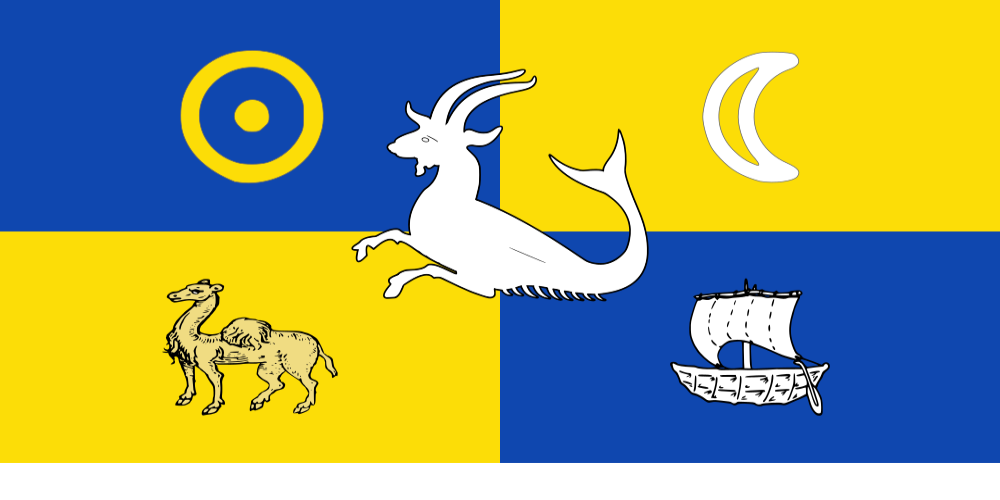
Makharatkha is a wealthy port city-state on the northern tip of the southern continent, on the Monstrous Sea. It was founded by runaway slaves back in the days of the Great War, and since then it has lived by trade, piracy, and the slave trade. Everything here is bought and sold, and the morals are so loose that in other countries Makharatkha is considered a hotbed of vice and heresy. And yet the second most important university of magic in the world stands here, and Makharatkha merchants and colonies are found all over the world.
Structure
- Estates. Nobles and commoners. The nobility took shape in Makharatkha many centuries ago and apparently traces its lineage to the founders of the city.
- The raja. The city-state is an absolute monarchy. Power is held by an ancient princely family that came to power about three hundred years ago. Several dynasties have succeeded one another over the last thousand years, but this has changed the life of the city little.
- Viziers. The raja has many advisers, each of whom is in charge of their own part of affairs. Usually they come from the local noble families and are appointed personally by the raja, although foreigners have sometimes been invited to individual posts.
- Trade. The basis of the economy is trade. Goods and provisions go from the Empire to Drinrog, and from there across the sea to Makharatkha. From the far south, sea expeditions bring slaves to the city, who are then sold to the Empire or east, to the Sunny Islands. The trading posts of the Sunny Islands supply dope, cocoa, and other curiosities. From the west, traders from the Dragons’ Country call at the local ports to barter silk for other luxury goods. The inhabitants of the Land of Oases also supply the city with slaves, and their lands serve as an overland trade route between Makharatkha, the Principality of Igni, and the Archdemon’s Plateau.
- Bribes. In this city everything is bought and sold. The laws are arranged so that you can buy your way out even of punishment for a grave crime. The watch often accuses an innocent person in order to shake money out of them. Bribery also thrives at the top: any trader knows that if you grease the right official’s palm, a lucrative contract is in your pocket.
- Piracy. The locals have long made their living by piracy, and the authorities turn a blind eye: the pirates rid the city of foreign rivals and guard Makharatkha ships. In effect, the pirates are the city’s irregular fleet, mercenaries who do dirty and dangerous work for the rajas. The Illior Empire, even in its heyday, tried more than once to put an end to this, but the bastions of Makharatkha are too mighty, and the desert surrounding the city too harsh.
Society
- Licentiousness. Makharatkha is famous for its loose morals: the nobility keeps hundreds of concubines of both sexes, the city is flooded with dope, and human life is cheap here. On top of that, any cults banned in most countries of the world are openly practiced here.
- Heresy. Makharatkha has become the main center of the teaching according to which the demons who fought the First Humans were not nearly as bad as people say. All the horrors about them are declared postwar lies of the elves and dragons, and the First Humans are declared malicious invaders who massacred the local inhabitants and were punished for it by the demons. The authorities don’t officially encourage these ideas, but they don’t persecute the preachers either, and the teaching spreads further and further across the world. They say its origins lie in the cults of the Archdemon’s Plateau.
- The cult of purity. For all its loose morals, Makharatkha has one trait in common with the Principality of Igni: it is obsessed with cleanliness here. Perhaps it is the memory of the Makharatkha Plague, which claimed many lives in 715–717, or perhaps an even older custom. One way or another, the streets here are constantly swept, rats and other pests are exterminated, and ablutions are part of everyday life. Raising the dead is forbidden in the city, and the inhabitants burn their dead. Along the way, the love of cleanliness has made Makharatkha one of the world’s leading producers of incense.
- The Omideh School of Charms. The city is home to the second most important university of magic in the world. Many consider it the best: these parts don’t favor wizardry, and the students have to master all the secrets without “crutches”. Studying here costs a lot of money, and the selection is very strict. The teachers here are famous for their cruelty, and legends circulate about the sophistication of their magical punishments. Gifted mages can study for free at the government’s expense, but are then obliged to enter the raja’s service.
- The young raja. Raja Ali ascended the throne at the age of four, after his father’s tragic death on a hunt. They say it was murder: with an underage raja, power effectively belongs to the viziers. The raja is now twelve, and soon he will be able to rule himself — but no one is sure he will live to come of age.
Regions / Cities
Makharatkha is a city-state and has no provinces as such. But to the south and southwest in the desert lie two satellite cities under strong Makharatkha influence — Panagar and Chungada. In addition, Makharatkha holds the pirate port of Khabarut in the Horseshoe Islands, and overseas it has its own colonies in the Sunny Islands.
Makharatkha (city)
A huge port on the northern cape, surrounded on one side by the sea and on the other by the Golden Sands desert. The raja’s palace, the Omideh School of Charms, and the famous bastions, which for centuries even the Empire couldn’t take, stand here. At the entrance to the city there still stands the wheel of a water pump with the body of Makhrodan, the ruler of Asmodius — a memento of the siege of 673.
Panagar
A small port town on the coast southwest of the capital.
Chungada
A city in the desert south of the capital, on the caravan road deep into the continent.
History
- Around −210. The Founding. A small settlement is founded by runaway slaves and other people seeking freedom. The city pays tribute to the demons, but they have no direct power over it.
- The 200s. The rulers of Makharatkha try to conquer the lands of the future Principality of Igni.
- 467–473. The Makharatkha–Asmodian War. Raja Khapur is troubled by news of demon worshipers in Asmodius, and he decides to take matters into his own hands. The troops of Makharatkha, together with the numerous tribes of the Land of Oases, invade the Archdemon’s Plateau. The city-states of the plateau unite against the invaders, the war drags on for six years and ends only with the death of the aged raja.
- 673. The Siege of Makharatkha. The Asmodian alliance led by Makhrodan, who declared himself the heir of the Archdemon Bismistan, suddenly attacks the city. Makharatkha, surrounded by desert and sea, had long neglected its fortifications and isn’t ready for defense. Makhrodan manages to occupy several city quarters, but not for long: the students and teachers of the Omideh School of Charms fight on the city’s side. Within a week the alliance’s army is put to flight, and Makhrodan himself is captured. The raja orders him locked in the wheel of a water pump in one of the city squares. Makhrodan died only forty years later, and his body, together with the wheel, was set up at the entrance to the city, where it stands to this day.
- Around 700. Archmage Shekhar of Makharatkha builds a tower on one of the Sunny Islands, and the city of Kifor grows up around it — the future center of the Makharatkha colonies.
- 715–717. The Makharatkha Plague. A magical disease nicknamed the Makharatkha Plague breaks out in the south and soon engulfs the whole world: almost every third person dies. To find a cure, several dragons of the Yellow Clan work with alchemists at the Vilarin University and the Omideh School of Charms.
- 758. After the death of Emperor Raloro, repressions begin in the Drinrog Prefecture, and many well-to-do people flee to Makharatkha.
- The 800s. The raja of the time begins building a luxurious palace on one of the Sunny Islands, intending to make it the heart of a future island empire, but dies before the construction is finished.
- 852. Emperor Lukas visits Makharatkha on his way to the Dragons’ Country.
- Around 998. The raja dies on a hunt, and his four-year-old son Ali ascends the throne.