Principality of Zalessk
- Capital: Zalessk
- Government: the veche and Grand Prince Grann the Crooked
- Population: about 100,000
- Languages: Northern Imperial, Draconic
- Army: about 3,000
- Money: none; barter is used
- Stylistic features: log houses, coarse woolen and leather clothing. The higher a person’s position, the more furs they wear. Men wear beards; there is very little jewelry. References: the Eastern European backwoods.
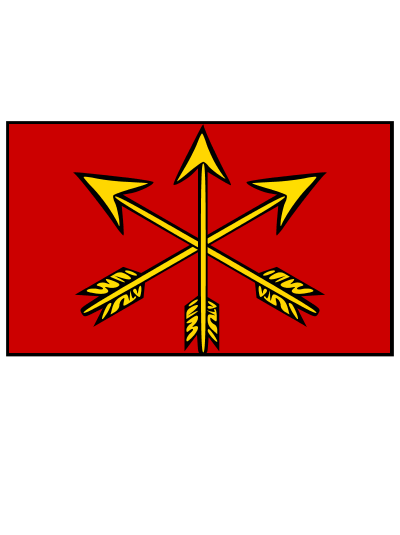
The Principality of Zalessk was part of the Illior Empire for many centuries, but was never fully brought under its control. For centuries undesirables were exiled here, and the exiles mixed with the local half-wild tribes. It is a remote land next to one of the most dangerous places in the world — the Long Swamp. The eternal source of danger here is also the source of wealth: in the swamp one can find many amazing things left over from the First Humans and the demons who fought them. After the Arnost catastrophe, these lands lost all their routes to the Empire, gradually grew wild, and became completely independent.
Structure
- Estates. The boundaries between estates are very blurred here. By law, the nobles are descendants of free citizens of the Empire: such families, as a rule, were richer than convicts and non-citizens. In practice, any sufficiently strong and rich person moves into the upper estate.
- The right of the strong. Small settlements are scattered across the principality and live separately, and every local princeling has his own claims to power. He takes it if he is strong enough.
- Grand Prince. This title was appropriated by the latest warlord who managed to subjugate all the other petty rulers of the land. His envoys have even visited the courts of the emperor of Illior and the king of Rojo to pay their respects. But no one is yet sure that the power of Grann the Crooked, who declared himself grand prince in 995, won’t collapse overnight.
- The veche. In special cases — for example, when too many creatures appear in the forests, or someone plans a big raid on other countries — the princes (warlords and local rulers) gather for a great council and decide how to act together.
- Economy. There is no money in the land. The rare Zalessk traders try to barter furs and ancient artifacts for weapons, fabrics, and spices without any money. The local settlements live the same way.
Society
- Gloom. Harsh life has given the people here a reputation for being gloomy and joyless. And indeed, smiles and noisy festivities aren’t held in honor here. People aren’t used to trusting each other: someone from the neighboring village is already a stranger from whom anything can be expected. Everyone hopes to find something valuable in the swamps and buy themselves a ticket to a new life in another country, and many simply take finds away from the luckier (or less lucky).
- Illiteracy. After the Arnost catastrophe, the land was cut off from the Empire, and the schools gradually fell into decline and disappeared as unnecessary. A village usually has one or two people who can read.
- Piety. Strange as it may seem, this sparsely populated barbarian land has given rise to as many as three religious movements, and some of them show very ancient roots going back to the culture of the First Humans. Some of these cults have spread far beyond the principality.
- Fugitives. It is one of the most remote and inaccessible places in the world. Dangerous criminals facing terrible punishments at home often flee here: even if such a person is found by magic, hardly anyone will fit out an expedition to Zalessk after them.
- Adventurers. People who want to fathom the secrets of antiquity often come here. Some, having found nothing, settle here and become beacons of civilization of a sort amid the wilderness.
- Ingenuity. Over many generations spent next to the technologies of the ancients, the locals have learned to use some of them and even invent something new on their basis. For example, the Zalesskians protect themselves from poisonous swamp gases with special helmets found in the ruins.
- Smuggling. The locals know the paths through the Whitehead Mountains leading to the Dragons’ Country. The country’s borders are closed, but goods from the west keep turning up in Zalessk.
Relations with other countries (click to expand)
How the average inhabitant of Zalessk regards other countries.
- Bastion Union: We’ve always beaten the Rojans, and we can beat ‘em now too, if these lads hire us.
- Slavetraders’ Coast: They say they’re like us, only they live in the south. Nobody from their parts ever makes it to us.
- Vishnevodskoye Principality: Decent lads, pay well, we’ve got kin there. Dunno why they’re so fond of messing about with corpses, but then, all folk are strange.
- Illior Empire: We’re kind of subjects of their prince-emperor. They built a lot here, taught reading and writing, healed people. That was long ago; now only traders come from there, and rarely at that.
- Principality of Igni: Heard it’s a rich country with lots of silver. They’ve fought Rojo a lot, and they’re strong.
- Principality of Enforis: For many centuries we’ve hired ourselves out to fight against them. Mighty warriors, to hold their cities for so many years. We respect them, but they say these folk mix too much with the elves, and they don’t think at all like people do.
- Colonial Rojo: We’ve hardly heard anything about the islands.
- Colonies of Makharatkha: We’ve hardly heard anything about the islands.
- Kingdom of Gross: The Grossians know their beer and aren’t afraid to travel to our principality. Some even make it straight through the swamps. Good people, like us.
- Kingdom of Zanra: Oddballs in masks with strange weapons. They come here more often than the rest, looking for the trinkets we find in the swamps. Only for some reason they keep trying to palm off bits of paper instead of goods or gold.
- Kingdom of Rojo: They’ve always lived richly in beautiful houses by the sea. They have lots of gold and tasty wine, and we’ve been robbing them for ages. They’re strong in battle, but we’re stronger, of course.
- Land of Oases: Never heard of it.
- Makharatkha: Their traders are frequent guests here. They buy slaves and sell outlandish overseas things. Seems they’re not always honest with us, but then, anything can happen to a trader on the way back, right?
- Elka’s Oligarchy: That’s where the Enforisians who are afraid of the war sail off to.
- Archdemon’s Plateau: Demons lived there in olden times, and what’s there now — we don’t know.
- Republic of Drinrog: Hucksters too. They don’t come often, but they trade more honestly than some and know exactly what we need. A couple of our towns even have their trading houses.
- Dragons’ Country: Our neighbors. Strange folk, but you can get along with them. Sometimes they fly to us themselves, and sometimes we sneak over to them. If you keep out of the white ones’ sight, you can do business with the green and blue ones.
- Ethel: The Vishnevodians say elves eat people. But the legends and tales sing otherwise: that they helped us fight the demons. We haven’t seen this folk for a very long time and aren’t sure it even exists.
Regions / Cities
The Zalesskians live mostly along the banks of the River of Doom. It is the main road of the land: the River of Doom flows into the Inner Sea, from where one can reach the civilized countries, and its western bank is relatively safe compared to the Long Swamp.
Zalessk
The capital and largest city of the land. Zalessk is almost entirely wooden, so it has burned to the ground several times. In the center of the city stands a small stone fortress — the palace of the grand prince. Goods and people from all over the principality flow here.
Owl Graveyard
One of the oldest cities of the land and Zalessk’s main rival for the right to be called the capital.
Vyshpa
The last port up the River of Doom where a relatively large vessel can put in. It was once the main transit point on the way to the Empire: the fortified highway to Nordheld begins here. The city center, built almost under Maldred the Conqueror, has survived to this day — at any rate, it is his statue that stands in the square. The arena has also survived and is used to this day.
Castra Brixia
A city founded by Maldred the Conqueror, for many years the center of imperial power in the land. After the Empire left, it gradually fell into decline and emptied. Now it is a small settlement where descendants of the imperials live. The only school and lyceum in the principality have survived here, where one can learn reading and writing, the sciences, and even simple magic.
Antium
A port city on the northern coast through which the principality keeps in touch with Vishnevodsk. For generations the locals have hunted sea monsters and fished.
Belogorsk
A small town in the foothills of the Whitehead Mountains. It is believed that the locals know the secret mountain paths to the Dragons’ Country. They say green dragons sometimes fly here to trade.
History
During the Great War
There is no exact information about who lived in these parts during the Great War, but they are almost never mentioned in the accounts of battles and campaigns. According to indirect evidence, after the demons’ attack through the Whitehead Mountains, the dragons cleared the land of demons, and after that it was of no interest to anyone. Some scholars are convinced that isolated human settlements already existed here by around −300.
In the Imperial Era
- Early years. Direct mentions of Zalessk in the chronicles appear rather late, but the inhabitants of Samrun sometimes mention barbarians living beyond the swamps. So it can be asserted that people lived here as early as the 50s.
- 163. Maldred’s Western Campaign. Zalessk first appears in the historical chronicles in 163. The ruler of Illior, Maldred, receives a letter: his northern vassals are being troubled by barbarians from the west. Zalessk is mentioned in the letter as the capital of their lands.
- In March of that year Maldred sets out on a campaign. From Nordheld his army marches along the edge of the Long and Frosty Marshes to the barbarian city of Vyshpa and takes it in a single day. Along the way the army clears the swamps and builds a road, opening the way to the western lands.
- In May Maldred divides his army. His son Anselm leads part of the army north, within two months subjugates the surrounding tribes, and founds the port city of Antium. Maldred himself, with his second son Gnaeus, goes southwest down the River of Doom, takes Owl Graveyard, and besieges Zalessk.
- In July Anselm joins Maldred, and the combined army goes to storm the city. Two days later Zalessk falls, and with it the resistance of the local tribes ends. The supreme chieftain of Zalessk dies in the assault, the other chieftains swear allegiance to Maldred, and some even join his army.
- In August Maldred founds the city of Castra Brixia and leaves the land that same month.
- 164–206. Illior develops its western colonies. Castra Brixia becomes the center of Illiorian power, and Antium grows into a large port where people fish and hunt sea monsters. Some Illiorian families move here.
- 206. Part of the Empire. When Maldred the Conqueror proclaims the Illior Empire, Zalessk, Castra Brixia, and the surrounding lands become part of it, but no separate prefecture is created here. The lands are subordinate directly to the imperial chancellery. The large local tribes swear vassal oaths personally to the emperor, while the others serve as mercenaries and guard the road from Vyshpa to Nordheld, the capital of the Arnost Prefecture. Officially the land begins to be called the Principality of Zalessk.
- From 264. Exile. Under Empress Julinika, the Principality of Zalessk becomes a place of exile. Usually those are sent here whose crimes are too grave to leave the guilty in civilized lands, but not grave enough for hard labor or execution. Most of these exiles were convicted on political charges. Escaping from Zalessk is very difficult because of the terrain itself: even a small garrison is enough to block the main routes out of the land — the ports on the River of Doom and the road to Nordheld.
- The 320s. Mercenary service. The nobility of the Arnost Prefecture, more precisely of Vishnevodsk, for the first time hires one of the Zalessk princes for war on the lands of Enforis. This lays the foundations of an alliance and friendship between the two lands. In the future, the princes of Zalessk often marry their children to Vishnevodians and vice versa.
- 431–446. The Taming of the River of Doom. Under Emperor Riklaeron, attempts are made to drain the Long Swamp and tame the River of Doom. Huge sums go into these projects: many structures are built to calm the river and make its course predictable. But it’s all in vain — just like the attempts to drain the swamps. The work is done by exiles, who are promised the right to return home, and very many people die. Several dams and bridges remain from that time, which now stand in the middle of dense forest: the River of Doom has changed its course many times since. The only useful construction of those years turned out to be the fortified road from Vyshpa to Nordheld, which, despite everything, has survived to this day.
The Time of Troubles
- 560–567. The Revolution in Rojo. The southwestern provinces of the Empire, taking advantage of the turmoil in the country, rebel. A fierce war begins. Emperor Marcus, whose regular army can’t cope with the rebels, promises the princes of Zalessk and the exiles land and position in the Empire in exchange for taking part in the war. Thousands of people answer the call: they make their way along the coast to the Khrell Prefecture and besiege the cities of the rebellious province. Settlements and lands change hands many times, and within a couple of years the whole region is emptied. In the end the Zalesskians lose many people, while the Empire loses the war and doesn’t keep its promises. Having lost Khrell and Rojo, the Empire also loses a reliable waterway to Zalessk. It is then that the Zalesskians’ custom of plundering the coast is born: they go down the River of Doom, make their way along the shore to the new Kingdom of Rojo, and plunder the coastal cities.
- 672. The Arnost Catastrophe. A huge part of the prefecture lies in ruins, and the surrounding lands are filled with undead. The Empire fails to recover the prefecture, and the overland route to Zalessk is cut off. Many inhabitants of Arnost flee to Zalessk. In effect, the principality’s independence begins from this time. The imperial officials gradually leave, and their places are quickly taken by local warlords calling themselves princes.
- 706. The Last Oath. For the last time, the princes of Zalessk come to Illior to swear allegiance to a new emperor — Raloro, who has come of age. With that the custom breaks off, and the land sinks ever deeper into wildness, although some princes long continue to believe that they rule by the will of the emperor of Illior and call him their lord.
- 715–717. The Makharatkha Plague. The terrible epidemic sweeps the whole world and, of course, reaches Zalessk. But because of the very sparse population and the habit of seclusion, not many people die here, and the disease dies out on its own in less than a year.
The New Age
The Principality of Zalessk is cut off from the world by nature itself, and almost no state order has taken shape here, so almost nothing happened there in the New Age. Zalessk pirates plundered the coast of the Khrell Lands and Rojo, their mercenary bands sometimes appeared in other countries, and petty princes fought for power for decades, quickly replacing one another on the throne of Zalessk or even trying to rule the whole land from their small towns.
- 995. Grann the Crooked. In the early 990s, one of the princes gains strength — Grann the Crooked. Where he came from is unknown, but he gathers an army large enough to subjugate all the cities of the principality, and in 995 he declares himself grand prince. Unlike previous chieftains who sought the same, Grann, having seized power, sends embassies to Rojo and the Illior Empire with rich gifts — furs, gold jewelry, and ancient trinkets from the swamps. This brings him some military and monetary support: influential politicians of Illior and Danir have taken an interest in a stable state in the west.
- 1005. One of the mercenary groups of the Vilarin Convention set off for Zalessk and disappeared.